

TV is a changing world. In Dubai, Abu Dhabi, and the UAE in general, migration to IPTV is driven by unlimited channels and on-demand services. Yet there is a dotted line with this technology, and one of the issues of great concern is this: Is it legal?
The internet has been flooded with conflicting information, leaving most people confused and fearful about potential dangers. Such a document will be authoritative, comprehensive, and plain-cut. We will unravel the confusing legal landscape, clarify what legal and illegal services are, and equip you with the information to make a sound, safe judgment about how you can have fun at home.
Clear Answer about the IPTV Legality in the UAE.
Regarding the main point, we should address it immediately. Yes or no would not work when asking about the legality of IPTV. All this depends on the service you are in.
The Technology vs. The Content: Critical Difference.

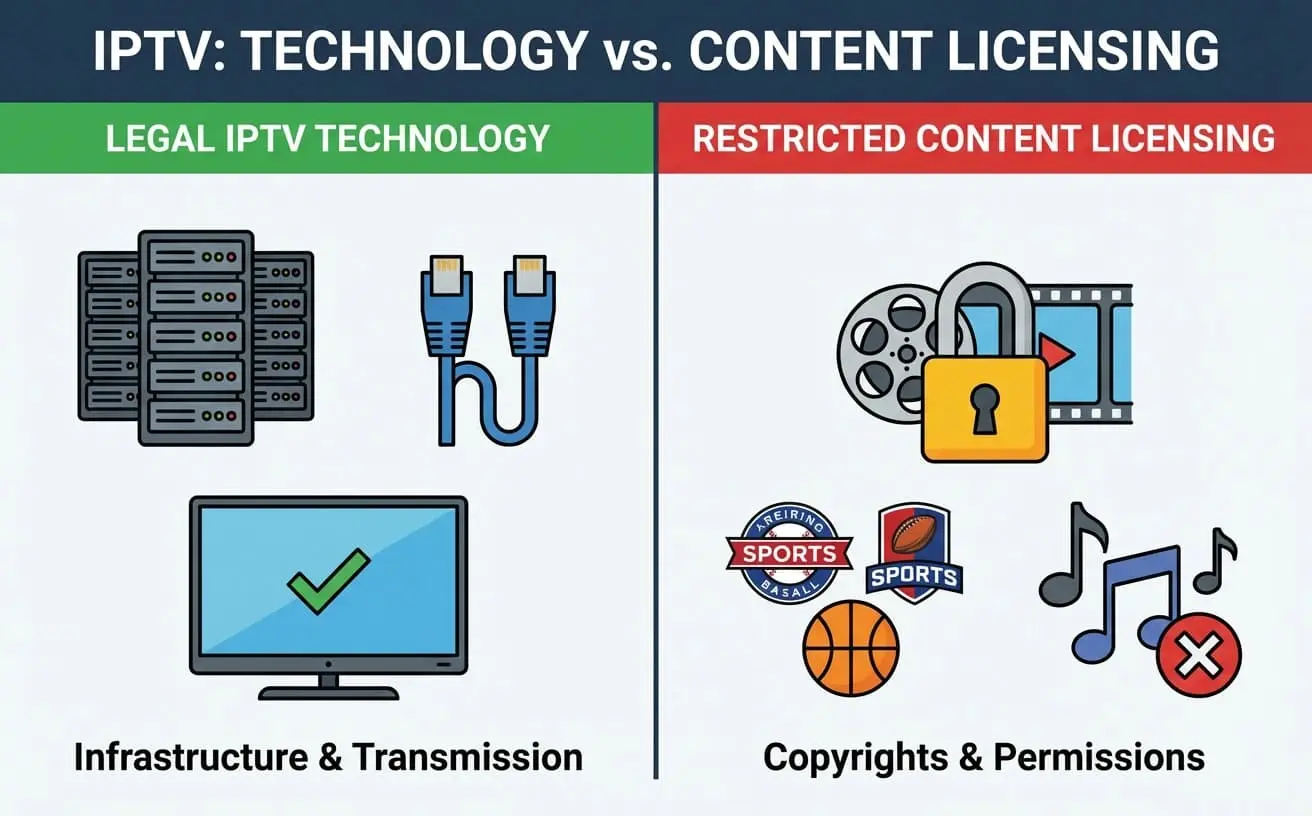
The idea is that one should learn best.
IPTV Technology:
The technology, the actual act of relaying television material through an internet protocol, is not illegal per se. It is a method of sharing, since any website can host video.
The License of the Content:
The legality of a given IPTV service rests solely on whether the business providing it has obtained the rights to stream the channel and the movies it offers most legitimately.
Therefore, it is not about IPTV’s legality, but about the provider’s licensing and permission to conduct business in the UAE.
The third hypothesis explains the lack of a clear yes-or-no answer.
The presence of two fundamentally different types of IPTV services utilised in the market implies there can be no single answer. One of them is a full-fledged, legal license, and the other is operating within the law. The trick to being safe is knowing how to tell the difference between them.
Comparison of 2 Sides of IPTV.

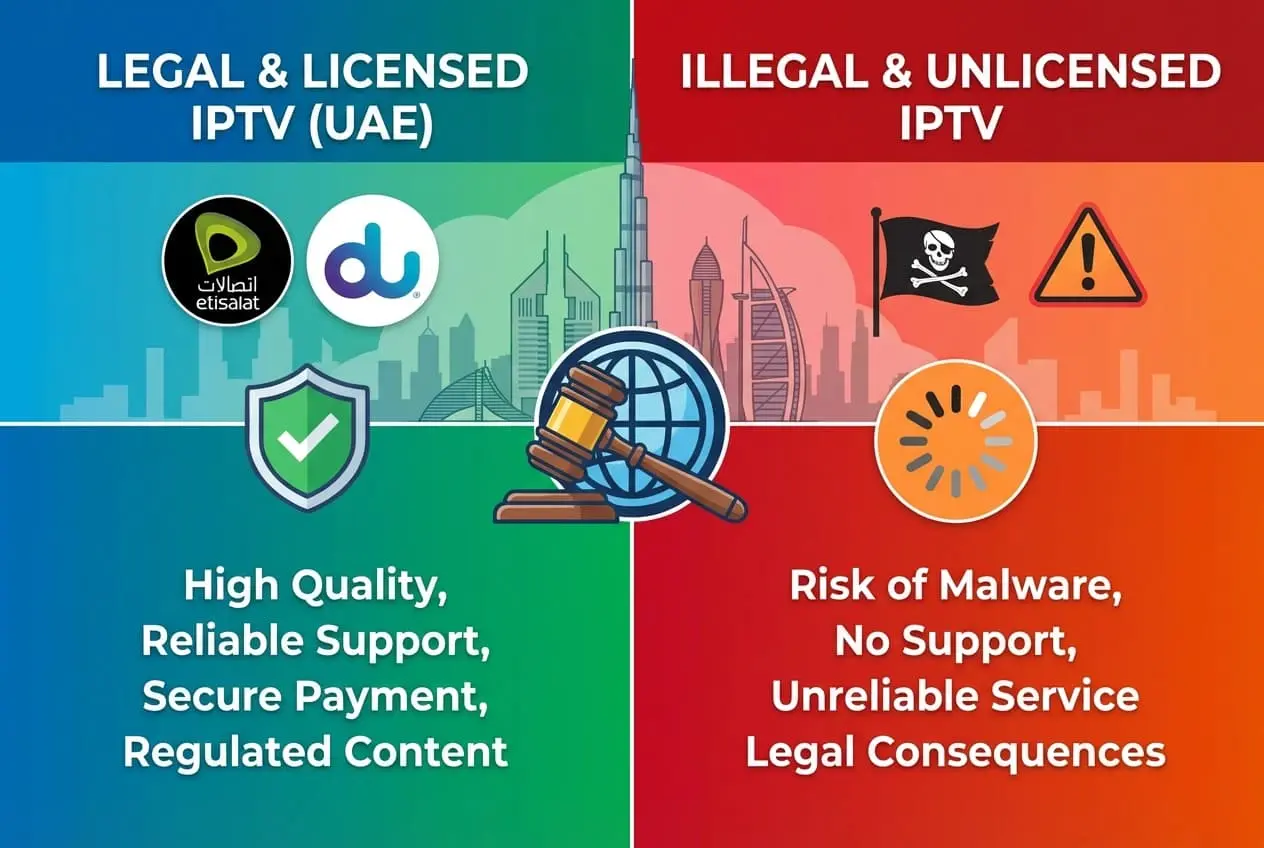
| Characteristic | Legal & Licensed Services | The unlicensed services of the Grey Area Services |
| Example Providers | Etisalat (eLife TV), du (du Home) | It has thousands of online personal sellers and social media sellers. |
| Legality | 100% Legal & Regulated by the TDRA. | Illegal. Violation of copyright and telecommunications legislation in the UAE. |
| Content Source | The rights over the content are obtained through purchase under a legal contract with the broadcasters. | It is the copying and retransmission of material without permission (piracy). |
| Subscription Process | Needs Emirates ID, official billing, and a formal contract. | Payment, mostly via WhatsApp registration, is anonymous. |
| Cost | Regulated monthly prices. | Incredibly low prices (too reasonable to be true). |
| Reliability | The customer service is stable and of quality. | Subterranean, liable to buffering, and can dissipate at any minute. |
| Security Risk | Safe. Official use of official application stores. | High Risk. Malware may be contained in unofficial apps, exposing financial information. |
The UAE Statutory Law: What the Law Says.
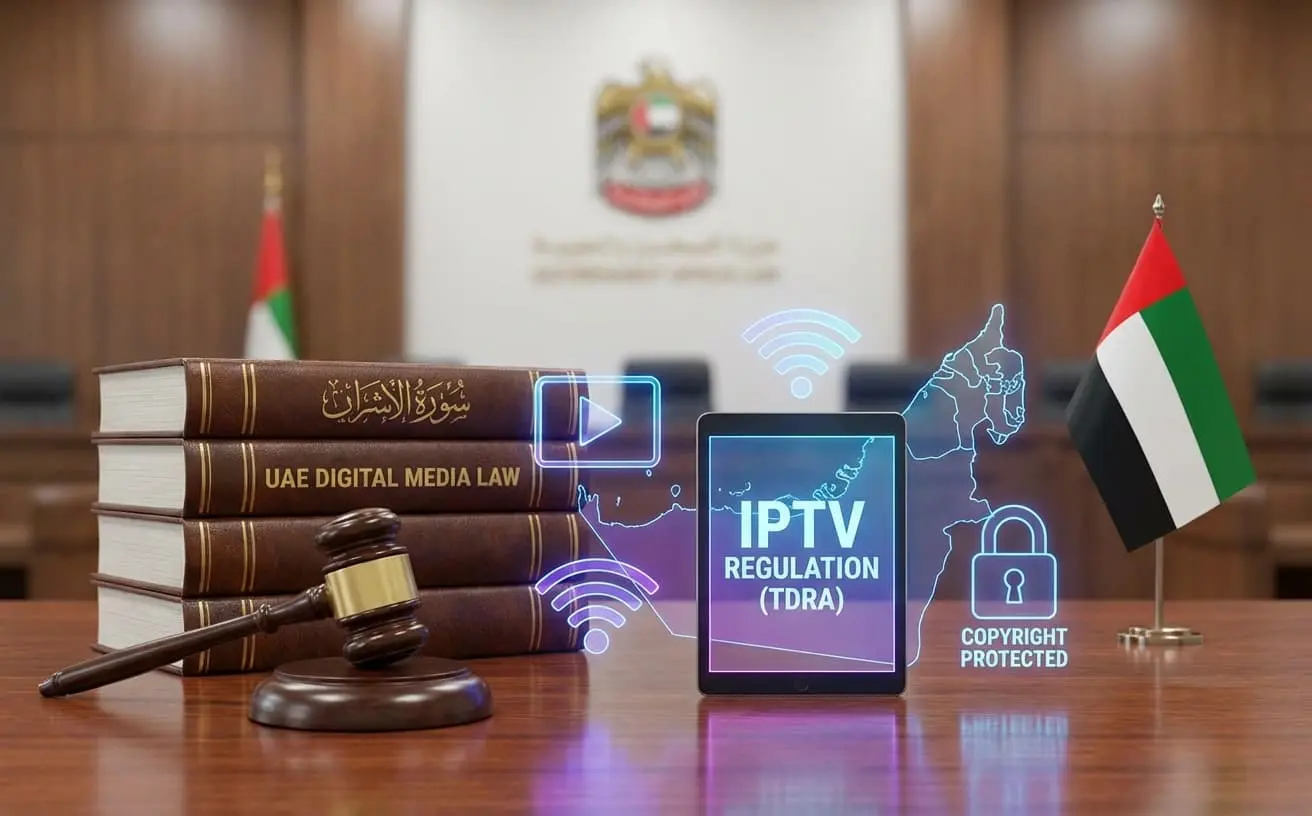
The UAE legal system is potent to the extent that it is geared towards protecting intellectual property and regulating telecommunications.
The TDRA (Telecommunications and Digital Government Regulatory Authority) Role.
The TDRA is a government agency that controls the telecoms sector in the UAE. It dictates the norms and even blocks illegal services and websites. The official policy of the TDRA is that distribution of media content should be duly licensed, and the fact that IPTV providers do not license IPTV distribution implies that they are in contravention of this rule.
Federal Law on Copyrights and Intellectual Property of the UAE.
The copyright holders and the broadcasters are well protected by the strong protections afforded by Federal Law No. 38 of 2021 on copyrights and neighbouring rights in the UAE. The violation of this act is the transmission or viewing of material via unauthorised sources. The illegitimate IPTV vendors violate this federal statute by selling access to channels without a license.
The Real Threats of Licensing the Unlicensed IPTV in the UAE.
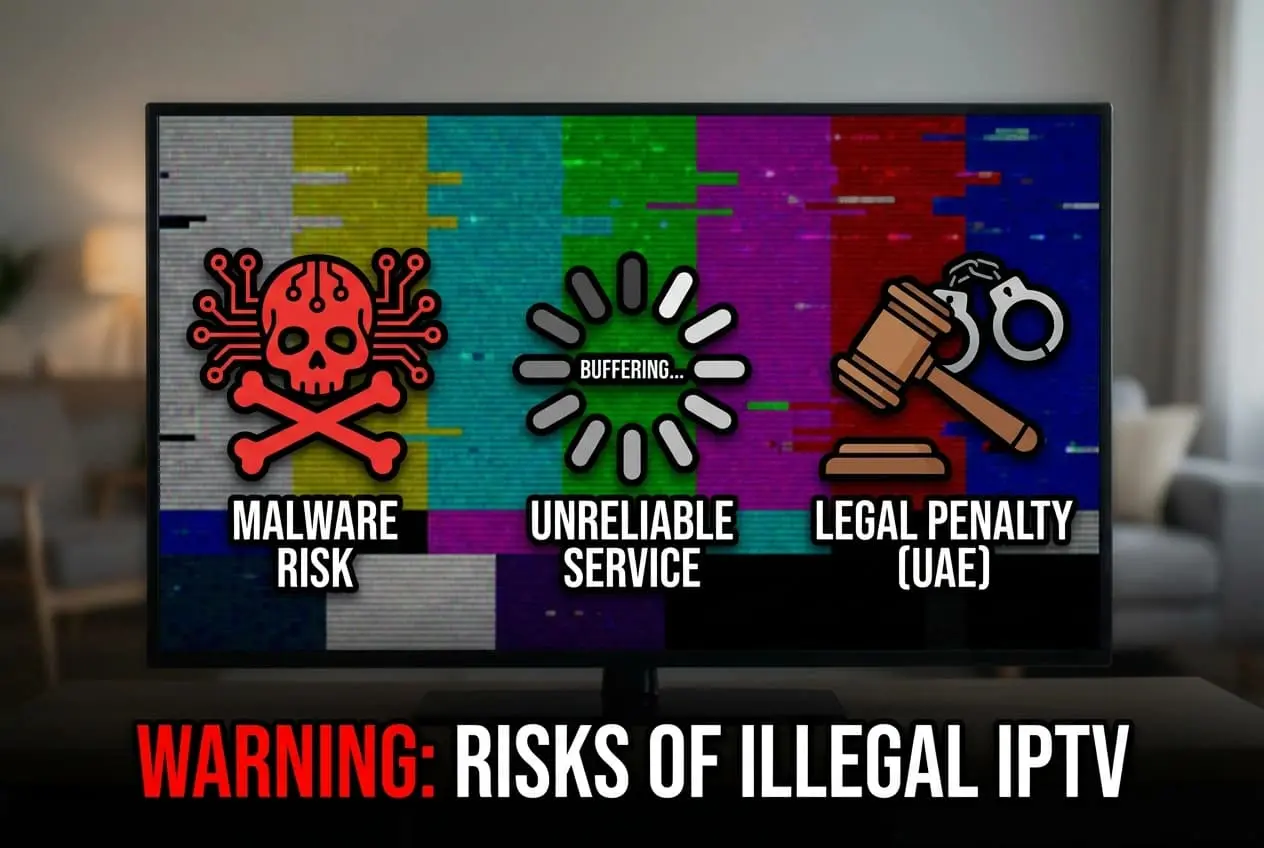
It may be easy to be tempted by the fact that an illegal subscription is cheap, but it is worth noting the so-called costs and risks that have to remain buried.
Risk 1: Legal Fines and Penalties.
Although the focus of those in power was traditionally put on the distributors of illegal services, the law also proposes punishments for the users. Accessing pirated material, even if you know you have done so, is prohibited. Massive prosecution of individual users is rare. Still, there is the threat of it occurring under the law, and those found trafficking or selling such services are severely punished and even sent to jail.
Risk 2: Exposure to Cybersecurity Threats.
This is among the risks that most users are not aware of. The prospect of contracting an unlicensed provider is to contract an anonymous, unregulated provider.
Such malware and viruses are hidden in the apps.
To access these services, you should regularly sideload an unofficial application on your device. Official app stores never vet these apps, and they can easily be loaded with malware, spyware, or viruses that steal your personal information.
The Unrelatedness of Security Means It Is Not Safe to Share Your Payments With Untrusted Sellers.Or you are often expected to transfer money to strangers via untraceable methods, such as crypto or bank transfers. This exposes your financial information to potential fraud, and even if the service is not refunded in the event of failure or theft of your funds.
Risk 3: Untrustworthy Service and Poverty.
Besides the legal and security risks, the user experience of the illegal services is usually terrible.
Explanation of why cheap services tend to be volatile (Buffering, Downtime)
These providers overload their servers to the point that they have too many users; as a result, there is constant buffering, pauses, and channels that are not functioning at all, especially during a significant event like a football championship match.
The Risk of Your Subscription Cancelling without a Warning.
These services operate in part in the shadows. And it is also natural that the service may be working today and not at all on the next day. The site has disappeared, the individual you were transacting business with has vanished, and you have lost your money with no one to blame.
The procedure for choosing a safe and allowed IPTV substitute in Dubai and the UAE.
To be a smart user means being able to tell which services are authentic and which are dangerous.
Having a half-battle to understand that you are a legitimate provider.
A trustworthy legal provider will fill in the following boxes:
- Status of the Company: Is it a licensed/registered telecommunications company in the UAE (e.g., Etisalat, du)?
- Professional Webpage and Customer Support: Does it have a professional, secure webpage and official, open customer support lines?
- Realistic Pricing: Is the price in line with the international TV package prices? Fifty dollars annually is a terrific caution when pledged in all channels.
- Formal Apps: Does it offer its services via official, verified apps on the Google Play Store or the Apple App Store?
- Formal Contract: Will they have a proper subscription process with a defined contract and terms of service?
In case the answer to any of them is no, there is a probability that you are talking to an unlicensed provider.
Your Better Alternative: Becoming a Member of Official Services.
The sure, legal, and reliable way to watch television in the UAE is to subscribe to the official services offered by Etisalat and du. The channel option may not be identical to the illegal services already provided, but you get peace of mind, high-quality streams, and customer service. Choose the best IPTV provider in Dubai…
Frequently asked questions about IPTV legality.
Will I Get in Trouble by Simply Viewing a Stream That Is Not Licensed?
Legally, yes. The UAE’s copyright law holds that the end user who uses pirated content is committing a crime. Despite the authorities paying more attention to sellers, users are not under threat.
Is using a VPN reasonable in the UAE? Is IPTV legal?
The UAE has stringent laws that regulate the use of VPNs. Viewing unauthorised or restricted content in the UAE (watching an unauthorised IPTV service) is a criminal offence and is subject to severe punishment.
Is it legal for my friend to sell me an IPTV box?
It represents one of the illegal distributions of pirated material: the sale of pre-loaded IPTV boxes with subscriptions to unlicensed services. This is a criminal act between the user and seller.
What are the red flags of a bogus IPTV service?
It includes payment requests via WhatsApp, extremely low prices that are too good to be true, a lack of a professional website, and a seller’s failure to answer simple questions about their company.
Key Takeaways
In a nutshell, comparing the two projects, an argument can be made that being informed and making a safe decision are key to creating a success story.
Even though the temptation to use thousands of channels at a relatively low cost is difficult to resist, the reality of unlicensed IPTV in the UAE is rife with threats to law, cybersecurity, and reliability. The technology itself is not illegal; merely its use by unwilling providers is. Click here for more information.
When you make the pros and cons count, the wise decision is clear. You are not just letting the law do whatever it pleases to you. Still, you are also guaranteeing a safe, quality, and stable entertainment experience once you choose licensed and official providers. The better part is on the side of the law, where it concerns the unconditional rest of mind.