
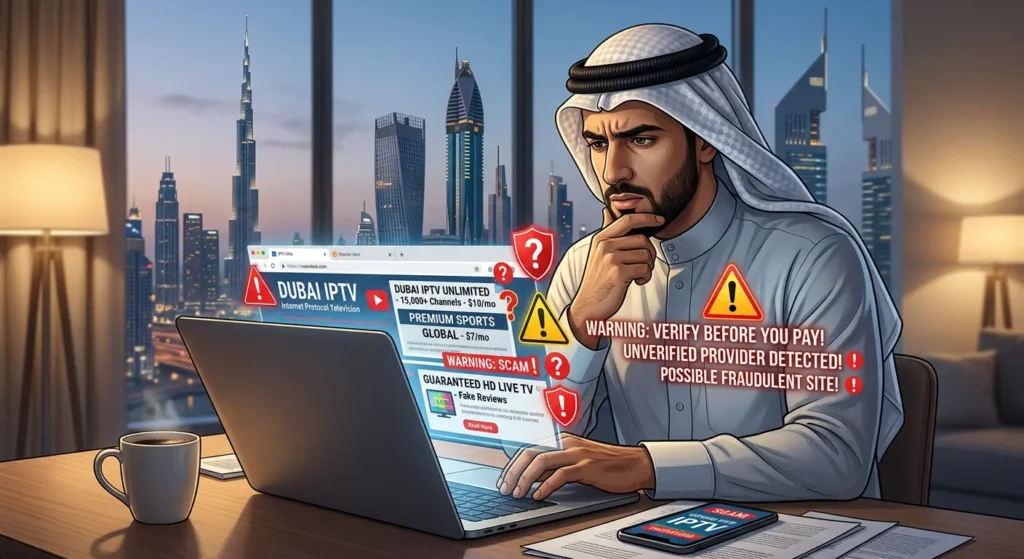
Why IPTV Scams in Dubai Are Increasing Rapidly
In such a technologically-linked and developed city as Dubai, people are always in search of something better, more diverse, and affordable in terms of entertainment. IPTV (Internet Protocol Television) has emerged as a popular alternative to traditional cable and satellite, offering a vast array of global content at competitive prices. However, this surge in popularity has a dark side: a dramatic increase in IPTV scams. The high demand for flexible streaming solutions, combined with a large expatriate population eager for content from their home countries, has created a fertile ground for fraudulent operators. IPTV scams in the UAE are growing fast, especially with the rise of fake IPTV providers in Dubai offering unrealistic deals. These scammers exploit the complexities of the digital market, luring unsuspecting consumers with promises that are often too good to be true, leaving them out of pocket and, in some cases, exposed to significant security risks.
What Are IPTV Scams?
Understanding IPTV Scams in the UAE Market
IPTV scams in the UAE market are deceptive schemes designed to defraud consumers seeking IPTV services. These scams range from selling non-existent subscriptions to providing unstable, poor-quality streams that are nothing like what was advertised. The core of the problem lies in the distinction between legitimate, licensed providers and illegal, pirate operations. While legal IPTV services operate under the authority of the UAE’s Telecommunications and Digital Government Regulatory Authority (TDRA), obtaining the necessary licenses to distribute content, scammers operate in the shadows.
How Fake IPTV Providers Operate
Fake IPTV providers build their operations on deception. They often create professional-looking websites or social media pages, promising thousands of channels, premium sports packages, and the latest movies for a fraction of the cost of legal services. Their primary methods include:
- Hijacking Content: They illegally capture and re-stream content from legitimate broadcasters without permission.
- Misleading Marketing: Using aggressive sales tactics and fake reviews to build a facade of legitimacy.
- Untraceable Payments: They often demand payment through unsecure and anonymous methods like cryptocurrency, gift cards, or direct bank transfers, making it nearly impossible for victims to get a refund.
Once payment is made, these providers may deliver a poor-quality service that frequently buffers, has non-working channels, or disappears entirely, leaving the customer with no recourse.
Why Dubai Users Are Easy Targets
Several factors make Dubai residents particularly vulnerable to these scams. The city’s diverse, cosmopolitan population creates a high demand for international content that may not be readily available through local licensed providers. Expats looking for channels from their home countries are often tempted by IPTV services offering extensive global channel lists. Furthermore, the allure of “cheap” or “lifetime” deals is a powerful motivator, especially for those looking to cut down on monthly expenses. This combination of high demand and price sensitivity creates a perfect storm that scammers are all too eager to exploit.
Most Common IPTV Scams in Dubai
1. Fake IPTV Providers with Cheap Prices
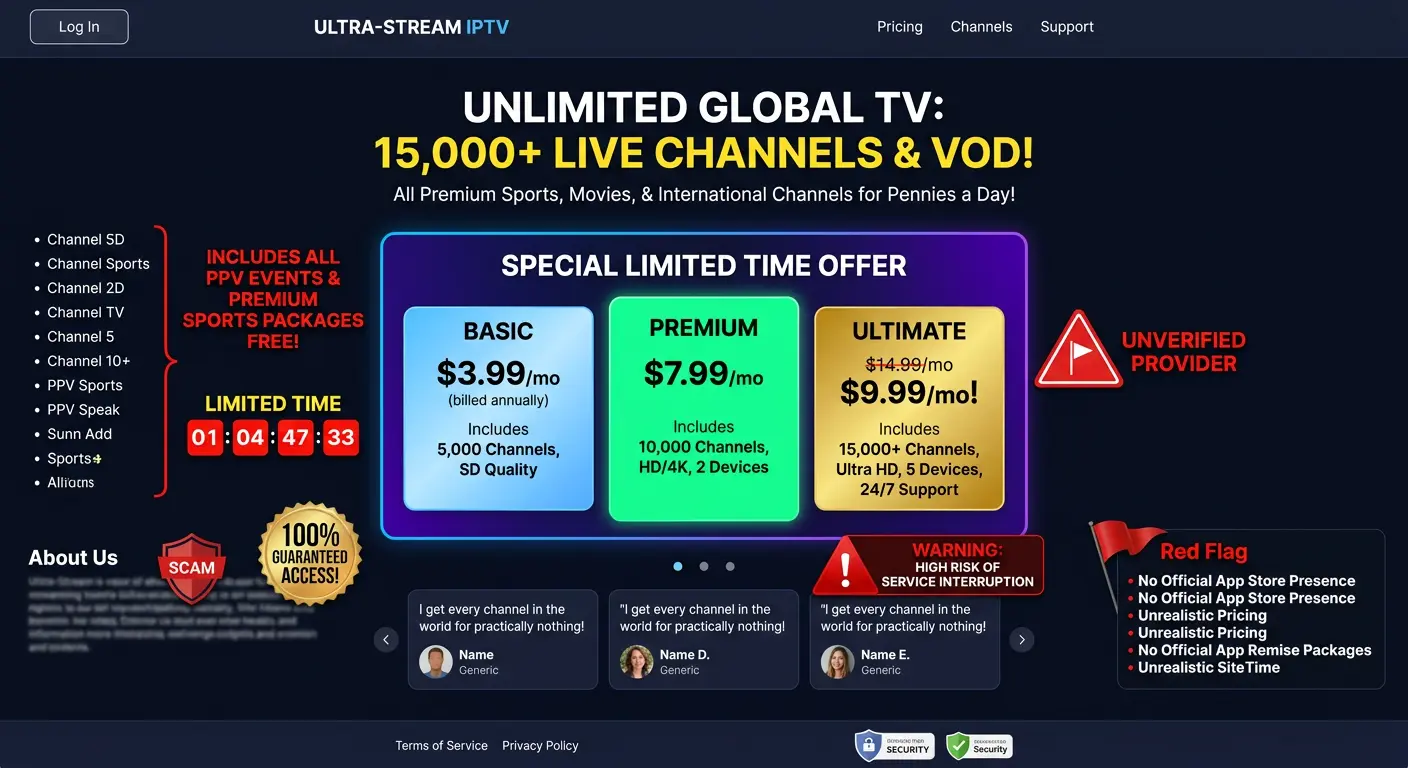
The most common trap is the offer of incredibly cheap subscriptions. Scammers lure customers with prices that seem too good to be true because they are.
“Too Good to Be True” Subscription Traps
A service advertising thousands of 4K channels, all premium sports, and a massive video-on-demand (VOD) library for a few dollars a month is a major red flag. These providers often use shared, overloaded servers, resulting in constant buffering, poor picture quality, and channels that disappear without warning. After they have collected enough money, the service often shuts down, and the operators vanish.
2. Free Trial Scams That Lock You In
Legitimate providers often offer free trials to let you test their service. However, scammers have twisted this practice.
Hidden Charges After Trial Ends
A fraudulent “free trial” may require your credit card details upfront. Scammers bank on you forgetting to cancel, and once the trial period is over, they begin charging your card with recurring fees that are difficult to stop. In other cases, the trial works perfectly, but the paid service is unstable, and the provider refuses to issue a refund.
3. IPTV Resellers Disappearing Overnight
Many people buy subscriptions from “resellers” who operate through WhatsApp, Telegram, or social media. While some are legitimate, many are not.
No Support After Payment
These resellers act as middlemen. Once they have your money, they may provide you with login details that stop working after a few weeks or months. When you try to contact them for support, you’ll find they have blocked your number or deleted their account, leaving you with no service and no way to get your money back.
4. Fake Reviews and Ratings
Trust is a scammer’s greatest tool. They manipulate it by creating an illusion of a reputable service.
How Scammers Manipulate Trust
Fake providers populate their websites and forums with glowing, five-star reviews. These testimonials often use generic, overly positive language and lack specific details. They might even post negative reviews of competitors to make their own service look better. Always seek out independent reviews on platforms like Reddit or trusted tech forums.
5. Lifetime Subscription Scams
The “lifetime” IPTV subscription is one of the most notorious scams in the industry.
Why “Lifetime IPTV” Is a Red Flag
No legitimate business can offer a lifetime of service for a small, one-time fee. The costs of maintaining servers, acquiring content (even illegally), and providing support are ongoing. These “lifetime” deals are designed to get as much money from you upfront as possible before the service inevitably shuts down.
Warning Signs of Fake IPTV Services
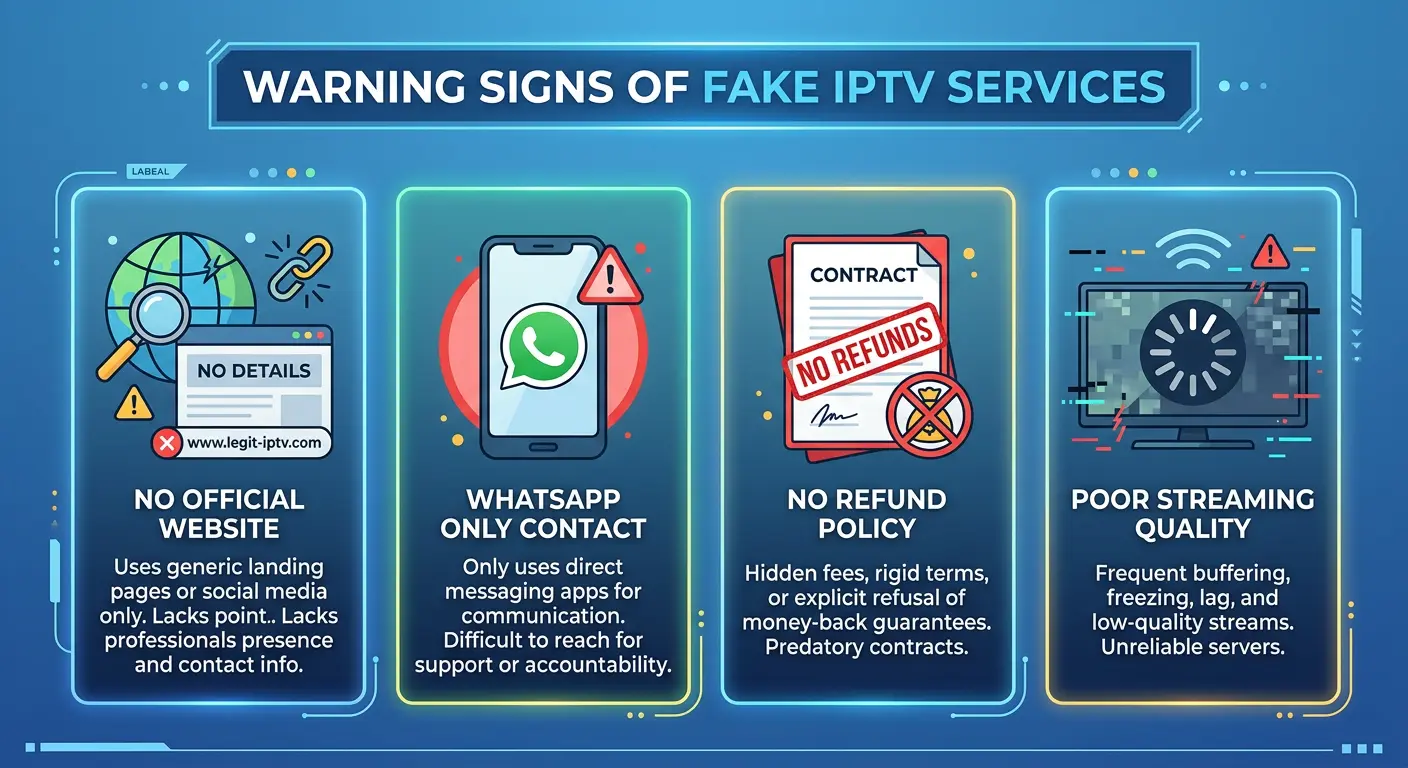
Red Flags You Should Never Ignore
No Official Website or Contact Info
A legitimate business will have a professional, well-maintained website with clear contact information, a physical address, and terms of service. Scammers often operate solely through social media or a single, poorly designed landing page.
Only WhatsApp or Telegram Communication
If a provider’s only point of contact is through an anonymous messaging app like WhatsApp or Telegram, be extremely cautious. This is a common tactic used by scammers to avoid accountability.
No Refund Policy or Terms
Reputable companies have clear and fair refund policies and terms of service. Scammers will have no policy or a vague one designed to prevent you from ever getting your money back.
Poor Streaming Quality Promises
While they promise HD and 4K, the reality is often a pixelated, buffering nightmare. If a free trial (from a provider that doesn’t demand your credit card) shows poor performance, the paid service will be no different.
Pricing Traps You Must Avoid
Why Cheap IPTV Can Cost You More
While saving money is tempting, opting for an unusually cheap IPTV service can have hidden costs that go beyond the subscription fee.
Hidden Fees and Upsells
Some services will lure you in with a low price, only to hit you with hidden fees for “premium” channels, VOD access, or even customer support. What started as a cheap deal can quickly become more expensive than a legitimate service.
Low Price = Low Stability
The rock-bottom price is a direct reflection of the provider’s investment in their infrastructure. Low-cost services use cheap, overloaded servers that cannot handle high traffic, especially during major live events like a football match. This results in constant buffering and an unwatchable experience.
How to Choose a Safe IPTV Service in Dubai
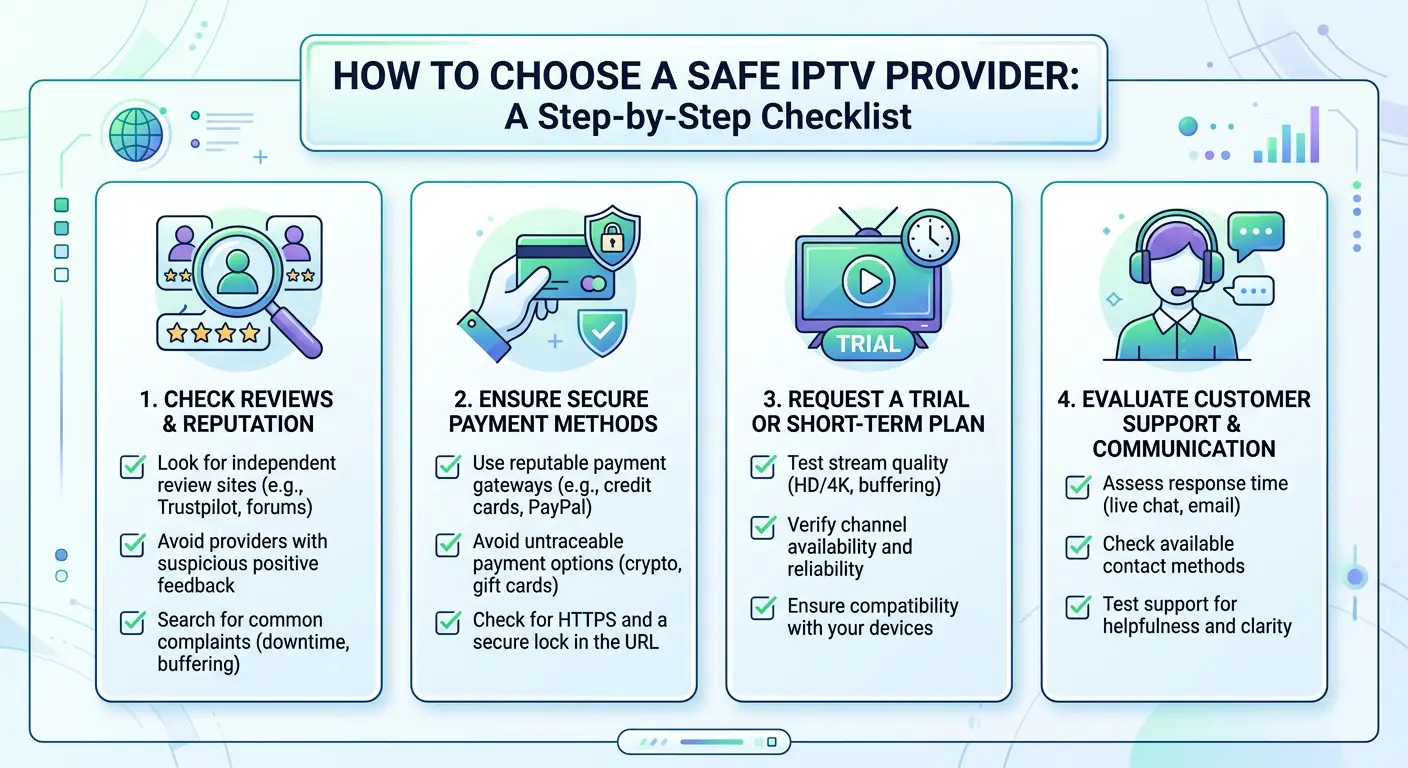
Step-by-Step Guide to Selecting a Trusted IPTV Provider
✔ Check Website Authenticity
A professional website with clear information, secure payment gateways (look for HTTPS in the URL), and transparent policies is a good start. Use online tools to check the domain age; a website created just a few weeks ago is a red flag.
✔ Read Real User Reviews (Not Fake Ones)
Look for reviews on independent platforms like Trustpilot, Reddit, and tech forums. Real reviews provide balanced feedback, mentioning both pros and cons, while fake reviews are often overly enthusiastic and lack detail.
✔ Test with a Short Trial (Smart Way)
Always opt for a short-term subscription first, such as one month. This minimizes your financial risk and allows you to thoroughly test the service’s stability, channel list, and customer support before committing to a longer plan. Never provide credit card details for a “free” trial.
✔ Look for Stable Streaming Performance
During your trial, test the service during peak hours (evenings and weekends) and during major live events. A good provider will maintain a stable, high-quality stream even under pressure.
✔ Verify Customer Support Availability
Send a query to their customer support team and see how quickly and professionally they respond. A provider with responsive, helpful support is more likely to be legitimate.
Free vs Paid IPTV – Which Is Safer?
Why Paid IPTV Is Usually More Reliable
While the line between legal and illegal is paramount, even within the realm of paid, unauthorized services, there’s a spectrum of reliability. Paid services, even if illegal, have a financial incentive to provide a baseline level of service to retain customers. However, the safest option is always a licensed, legal provider.
Risks of Free IPTV Services
Free IPTV services that offer premium channels are almost always illegal and unsafe. They often serve as a vehicle for malware, data theft, and other cyber threats. The streams are typically unreliable and of very poor quality.
“If you’re still unsure, check our detailed guide on Free vs Paid IPTV UAE: Complete Comparison Guide to understand which option is safer and more reliable.”
Tools & Tips to Verify IPTV Providers
Simple Ways to Check If an IPTV Service Is Legit
Use Online Review Platforms
Websites like Trustpilot and forums like Reddit are invaluable resources for vetting IPTV providers. Look for consistent patterns in user feedback.
Check Domain Age & Reputation
Use a “WHOIS” lookup tool to check when the provider’s website was registered. A brand-new website is a significant red flag.
Avoid Unknown Payment Methods
Legitimate services offer secure, traceable payment methods like credit cards and PayPal. Be extremely wary of providers that only accept cryptocurrencies, Western Union, or gift cards, as these are favored by scammers for their anonymity.
What to Do If You Get Scammed
Immediate Steps to Take
Contact Payment Provider
If you paid via credit card or PayPal, contact your bank or the payment service immediately. Report the transaction as fraudulent. They may be able to reverse the charge and block future payments.
Report the Service
Report the fraudulent website or service to consumer protection bodies in the UAE and to online scam tracking organizations. This can help prevent others from falling victim.
Avoid Reusing Credentials
If you created an account with the scam service, and you use that same password for other online accounts (like your email or banking), change those passwords immediately. Scammers can try to use your credentials to access your other accounts.
Best Practices to Stay Safe Long-Term
Smart Habits for IPTV Users in Dubai
Don’t Share Personal Info
Be judicious about the personal information you share. A streaming service does not need your Emirates ID or passport number.
Avoid Long-Term Plans Initially
Even with a seemingly reputable provider, start with a monthly subscription. This gives you the flexibility to leave if the service quality deteriorates.
Always Use Secure Payments
Stick to payment methods that offer buyer protection, like credit cards. Avoid direct bank transfers or anonymous payment methods.
FAQs About IPTV Scams in Dubai
Is IPTV legal in Dubai?
IPTV technology itself is legal. However, the service is only legal in the UAE if it is provided by a licensed company (like du or Etisalat) that holds the proper rights to broadcast the content. Using a provider that streams copyrighted material without a license is illegal and carries risks, including potential fines.
How do I know if an IPTV provider is legit?
A legitimate provider in the UAE will be licensed by the TDRA. For unauthorized providers, signs of a more reliable (though still legally grey) service include a professional website, transparent pricing, responsive customer support, secure payment options, and positive independent reviews.
Are cheap IPTV services safe?
Generally, no. Extremely cheap services often come with significant risks, including poor performance, lack of security, and the high likelihood of being a scam. You may also be exposing your personal data and devices to malware.
Can I get a refund from fake IPTV providers?
It is highly unlikely. Scammers use untraceable payment methods precisely to avoid giving refunds. Your best chance is to dispute the charge with your bank or credit card company if you used a traceable payment method.
Final summary
The world of IPTV in Dubai offers incredible variety and value, but it is also fraught with risks. The allure of accessing thousands of channels for a low price can be strong, but it’s crucial to be vigilant and informed. By learning to recognize the red flags of a scam—unrealistic prices, anonymous communication, insecure payments, and fake reviews—you can protect yourself from financial loss and security threats. Always prioritize safety over savings. Test services with short-term plans, read independent reviews, and never share more personal information than necessary. By making smart, cautious choices, you can navigate the IPTV market safely and enjoy a world of entertainment without falling victim to scams.