
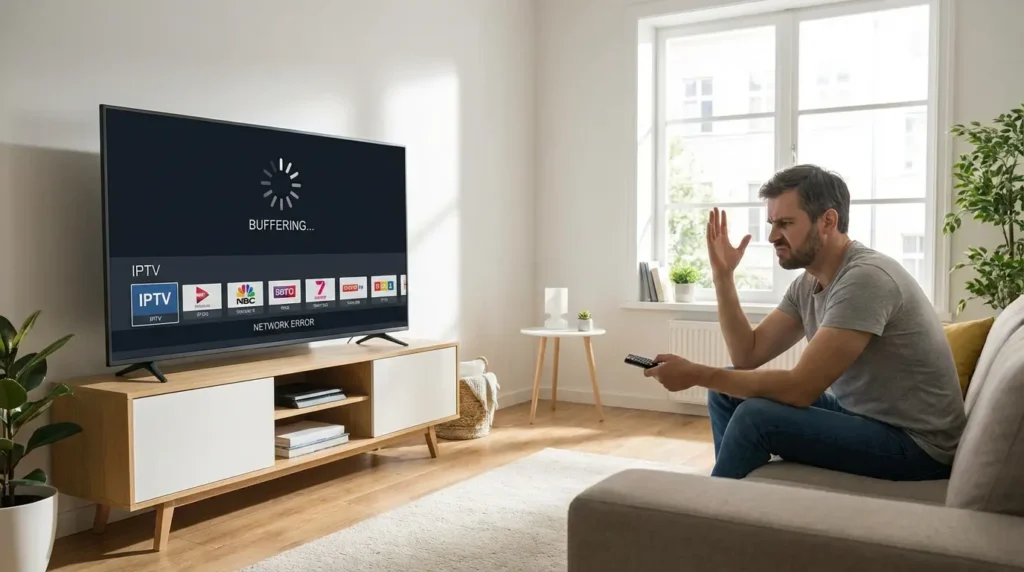
It is the most annoying of the modern-day entertainment. You are engrossed in a movie, you have watched the final minutes of the great sports game, or you are satisfying your favorite series when suddenly the screen is frozen. The frightening, unreliable chopping loading screen fades in at the center of your screen, and the audio gets lost. Your stream is buffering.
This is the initial issue among the customers of the IPTV, and it is the initial issue that has been complained about, which causes more headaches and ruined viewing experiences than any other problem. But what would you do should you be able to make it permanent?
It is not a sort of bag of tricks. It is the last and the overall tool for the diagnosis and troubleshooting of IPTV buffering. To make you understand what the true cause of your buffering is and to eliminate it forever, we are going to approach it step-by-step, starting with the easiest ones and then the more complicated ones.
What are the buffering issues with my IPTV in Dubai? Getting a feel of the fundamental issue.
Before we can rectify the situation, we must ascertain what is being done behind the scenes.
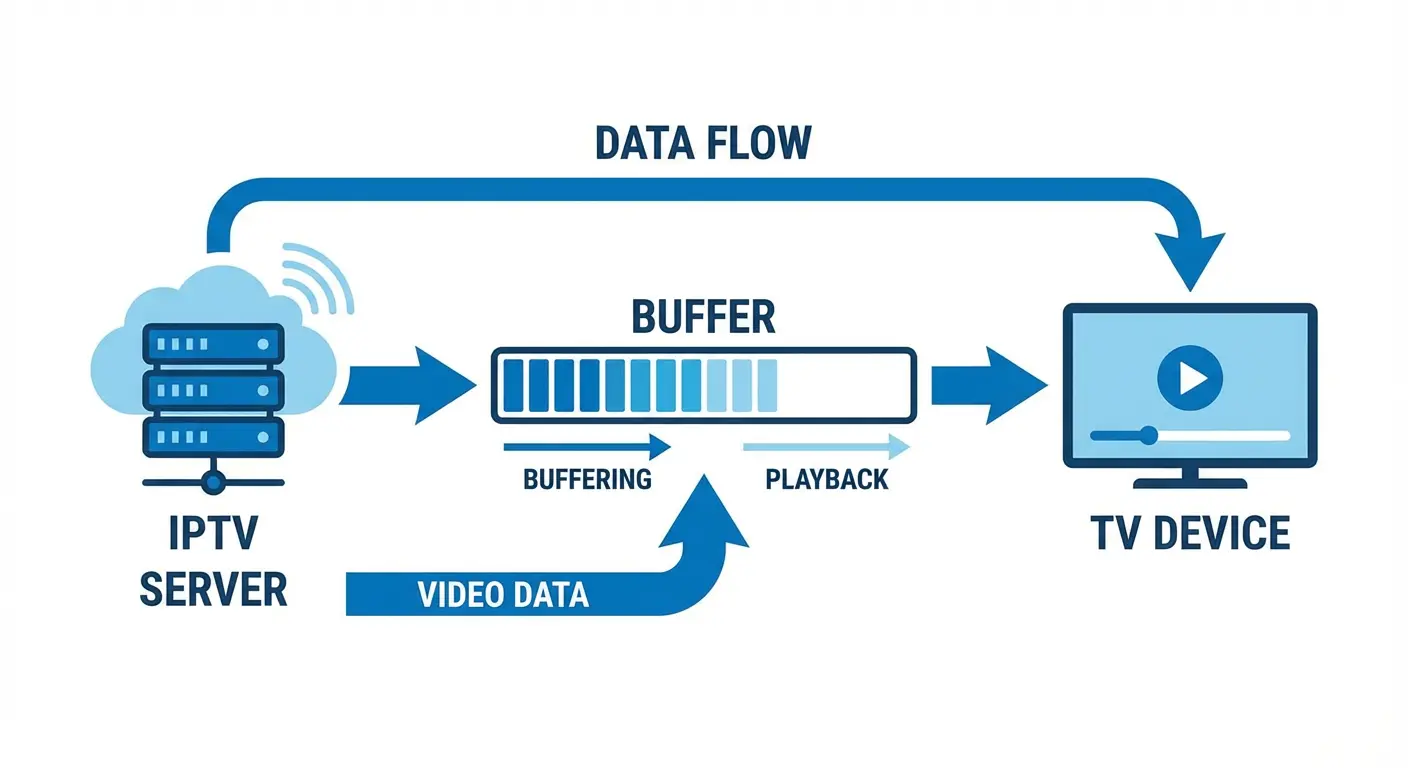
The Technical Reason: what buffering really is.
The flow of information you are considering of IPTV is a constant stream of information between a server and your device. To provide you with a constant flow of the video, the video player of your device can download a small part of the following video as a sort of memory known as a buffer.
As long as whatever the internet is sending into this buffer is at a slower rate than the display rate of the player on the screen, then you have a stream that is smooth.
Buffering occurs when the user depletes video data in the buffer. It should interrupt the stream and wait till more information is received. This halt is the spinning jenny. It is always because of a bottleneck, a section of the data-delivering channel that is holding up things.
The 3 Major Buffering Sinners:
Nearly all the issues in the buffering could be linked to one of the three areas. Our guide is going to demonstrate to us the way to check all of them.
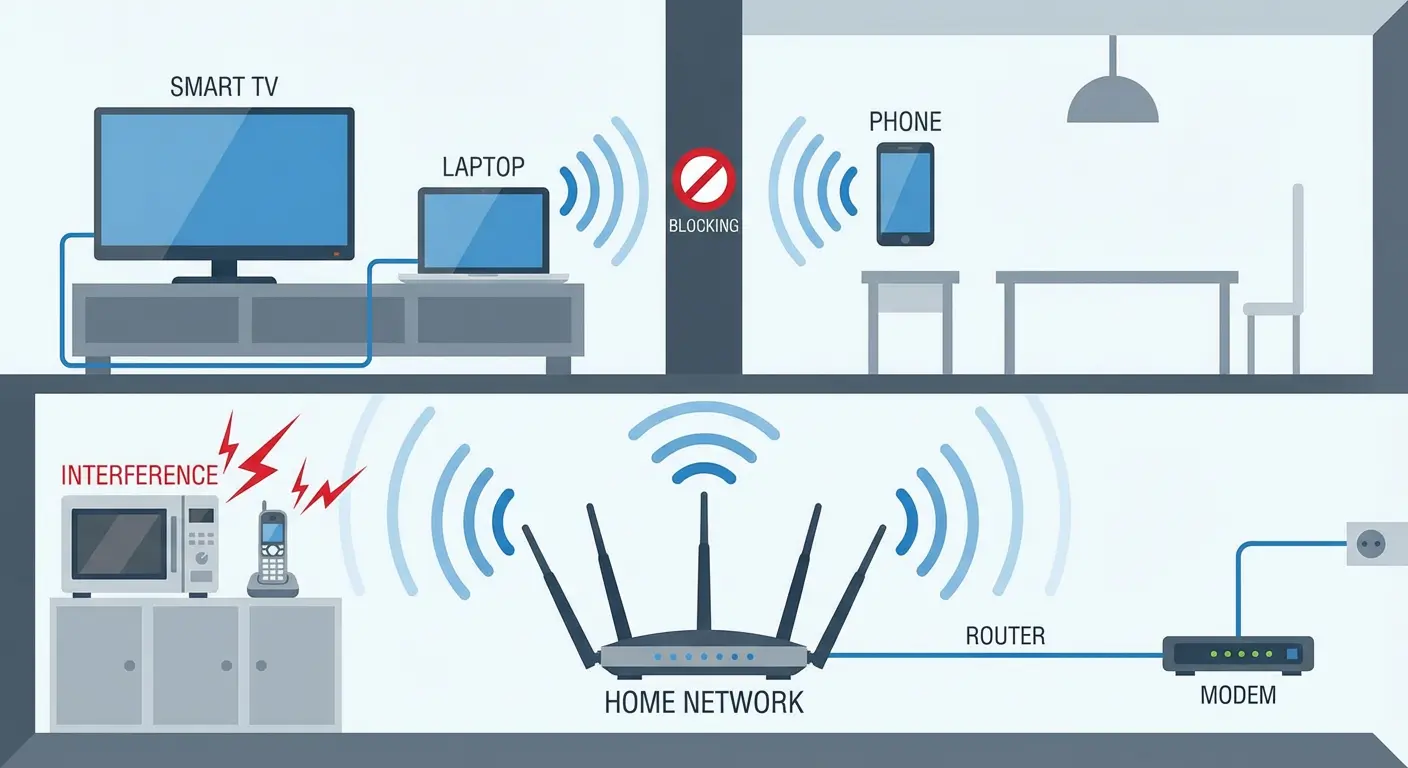
Your Local Network
This includes your internet provider, your modem, your Wi-Fi router, and your connection to your computer.
Your Streaming Hardware
This will be the device you are looking at (e.g., Fire Stick, Android Box, Smart TV) and the IPTV player application that is presented on the device.
The Servers of the IPTV Provider
These are the servers upon which the video stream is sent to you.
The very title shows that it is attentive to details, which adds to the credibility of the article.
The title itself demonstrates that it is detail-conscious, which is among the contributors to the validity of the article.
Follow these steps in order. Do not skip a step. It is a rational exercise that is supposed to determine the bottleneck in an efficient way.
Step 1: The Golden Restart (The 60-Second Fix)
This step will enable you to unfreeze your computer more effectively, which is directly linked to the first step of the aforementioned problem-solving techniques.
The Golden Restart (The 60-Second Fix) – Step 1: This part will allow you to unfreeze your computer in a more efficient way, which is closely connected to the initial part of the above-mentioned problem-solving method.
The latter is capable of repairing temporary glitches by a truly incredible proportion when clearing memory and reestablishing network connections.
Proper guide on the way to reboot your modem, router, and device.
Switch it all off: Disconnect the power cords of your IPTV streaming device, your Wi-Fi router, and your internet modem.
Waiting for 60 seconds: This matters. It also allows the internal components to empty the battery and rewind.
Plug them back in, in order:
First of all, plug in and connect a switch to your modem. It should be left to cool to solid stability (1–2 minutes).
Second, connect and turn on your WIFI router. Wait till its lights have stabilized.
Finally, unplug your IPTV streaming unit and turn it on.
Test your IPTV stream after several minutes. The buffering comes with losing the buffering. Otherwise, proceed with the second step.
Step 2: Check the Success of Your Internet Connection.
You have to know whether it is your internet connection that is on the blink of an eye.
Meaningful Speed Test How to Conduct a Meaningful Speed Test (It is not all about speed).
Install a web browser on a laptop or phone on the same network and go to a website that is trusted, like speedtest.net or fast.com.
Get to know your results: ping, jitter, and stability.
Also do not just look at the download speed on the final analysis. In the example with IPTV, the stability is higher than the raw speed.
Download Speed: 25–30 Mbps should always be consistent and steady to play HD content. For 4K, aim for 50+ Mbps.
Ping (or Latency): It is a metric of responsiveness. Lower is better. Anything under 50 ms is good.
Jitter: It is implemented to check the stability of your ping. Great jitter means that you have a poor connection. In the case of streaming, you would like this to be as low as possible, and hopefully the latency should be less than 10 ms.
Your problem has been identified: your internet connection, when your speeds are extremely low, your ping and jitter are extremely high, etc. Contact your Internet Service Provider (ISP). Once your results have been shown to be good, then move to the next step.
Step 3: Network optimization of home network.
There is no use in having a high-speed internet connection that employs a slow domestic network.
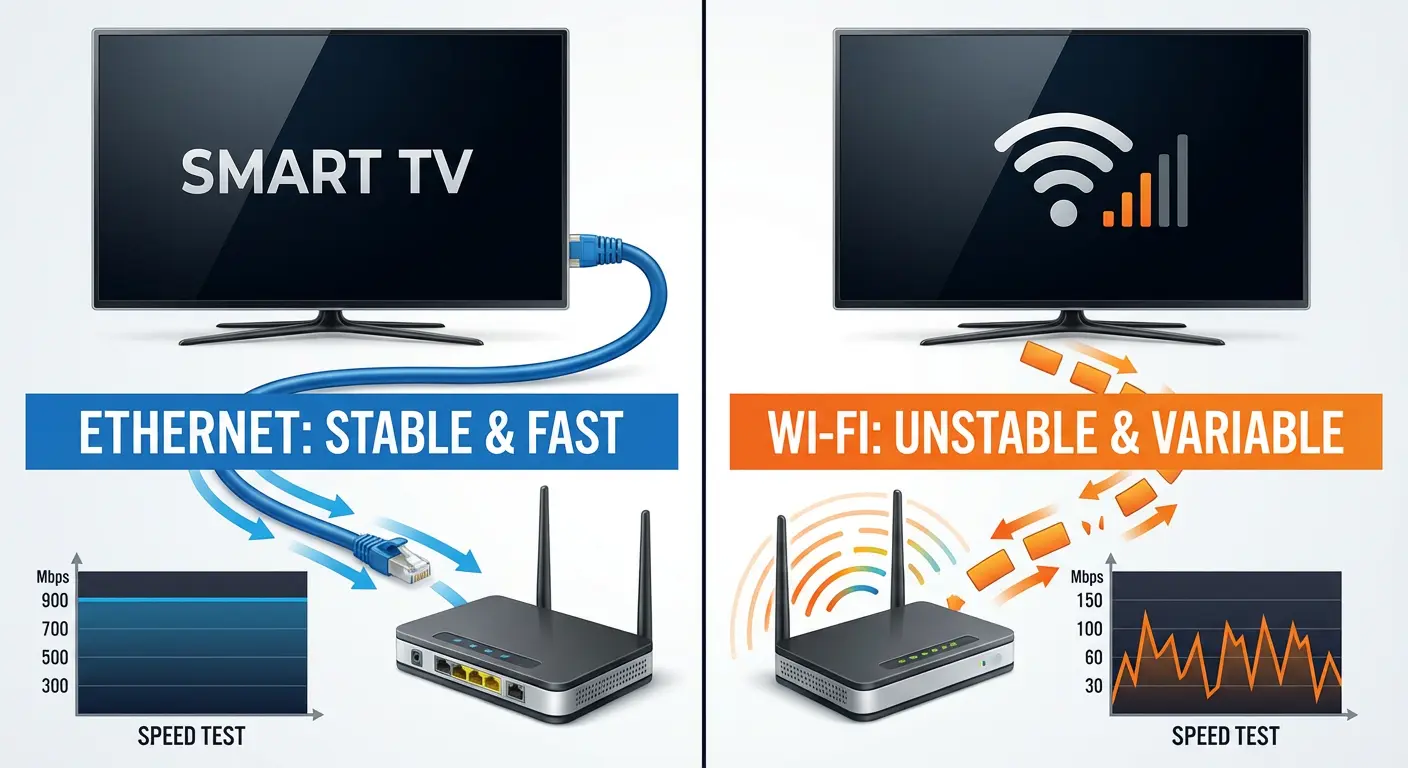
The Ultimate Solution of Them All: Replace with Wired Ethernet.
It is the most important piece of advice in the entire guide. Wi-Fi can be easily used but is not reliable; it is also vulnerable to walls, range, and devices. The best and most stable internet connection possible is an Ethernet cable between your router and the IPTV device, and therefore, this eradicates any problems with Wi-Fi. Use it in case your computer has an Ethernet port.
Wi-Fi Position and Channel Overload: When You Just Have to Use Wi-Fi.
When you are not able to connect through a wired connection, then make your IPTV device as close as you can to your Wi-Fi router. The router must be in an open and centralized location and not crammed in one corner of a cabinet.
Will Tell You How to Find Bandwidth Hogs in Your House and Kill Them.
Is there another individual within the house downloading big files, online games, or 4K Netflix? These professions consume your bandwidth. Try to pause them and see whether your IPTV stream improves any.
Step 4: Troubleshoot Your Application and Machine for Streaming.
In the event that your network is tremendous, it could be your hardware that is keeping you.
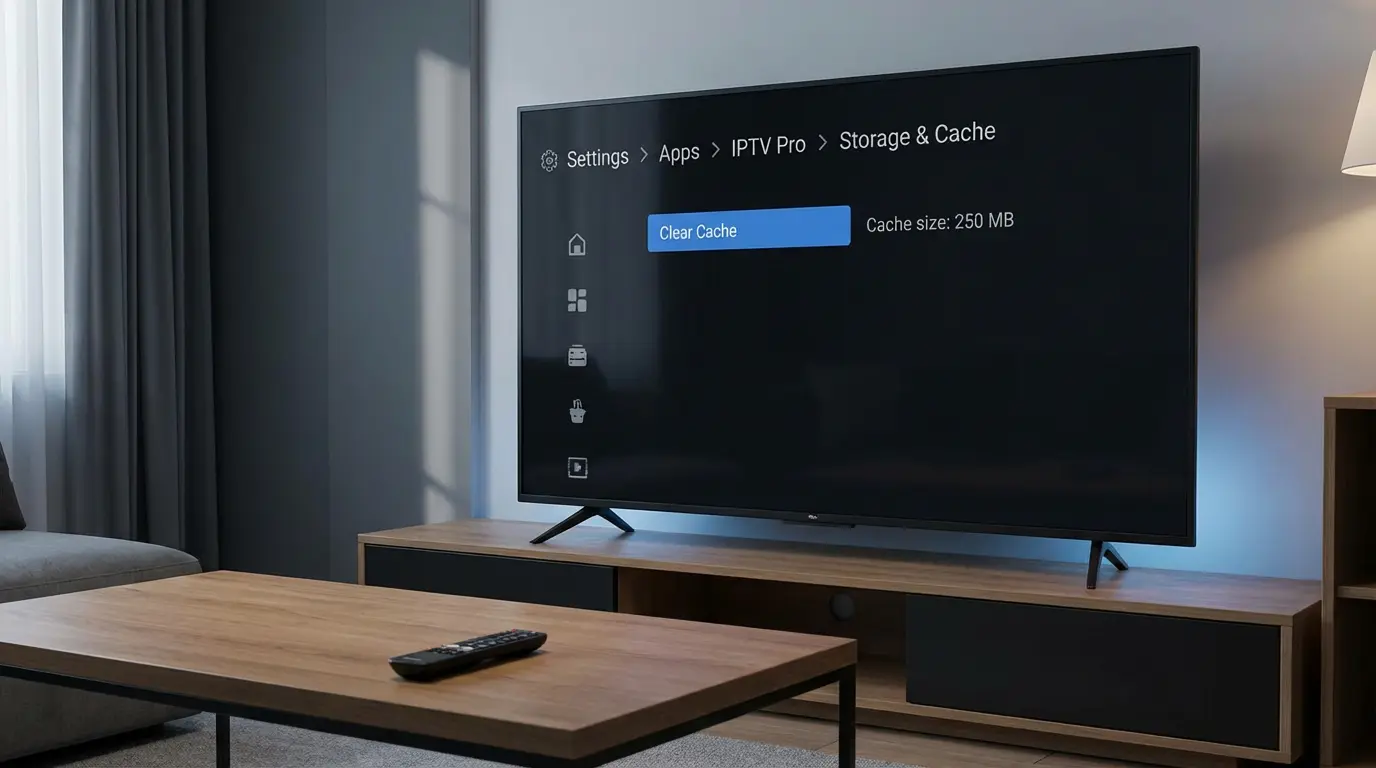
Users should also clear the IPTV caches.
The IPTV player applications (IPTV Smarters, TiviMate, etc.) store temporary files in a cache in the long run. A swollen or corrupted cache could cause an issue with performance, and buffering is one of the locations.
In the device, open the settings menu, then the Apps menu, and your installed IPTV app, and go to the clear cache option. Do NOT choose the option that will say “Clear Data,” since it will erase your login information.
Do you have the horse on your device? (Old Firesticks & Cheap Boxes)
Not all the streaming devices are alike. The processor of an older Amazon Fire Stick or a very cheap and unbranded Android box may struggle to decode high-quality video in real time.
Once the above-mentioned solutions have been tried and tested, and you still do not receive buffering, especially for 4K streams of high quality, the bottleneck can be your own device.
The IPTV Player application needs to be maintained.
Ensure that your IPTV player application has received the latest update; the developers update their applications to fix bugs and improve the performance of their applications.
Thesis: VPN Throttling Test of ISP.
And even after doing all this, if the buffering persists, especially during the peak times (evenings), then you may become a victim of the throttling of the ISPs.
ISP throttling: what is the result of buffering?
Other Internet Service Providers throttle (or even purposely degrade) specific types of traffic on their internet, like IPTV streams, in order to manage traffic on their systems.
How to Check Throttling by Using a Quality VPN ?
A great VPN encrypts the internet traffic. This hides it from your ISP; therefore, their automatic throttling systems do not know what you are up to.
Register for a dependable and high-speed VPN.
Install the VPN on your streaming support.
Identify with a server that is nearby.
Test your IPTV service again.
At this point, when the buffering disappears in the process of connecting to the VPN, then you have now confirmed that your ISP is blocking your connection.
When the Problem Is Not You: The IPTV Provider Role.
It is a bitter truth, but sometimes you cannot get ahead in your own home. It’s your provider.
Clues That Your Supplier Is the Bottleneck.
Buffering Only at Peak Time or Live Sports: That is the most important pointer of an overloaded provider.
Constant Channel Failure or “Unplayable” Failures: This is an indicator of faulty or unresponsive servers.
Buffering Happens to More Than One Single Device and Network: In case you have been testing your subscription at the house of your friend and he has good internet but buffers anyway, the provider is the most likely suspect.
What is the meaning of having a buffer-free IPTV provider?
Reliable suppliers invest a lot of finance in their plants.
High-Bandwidth Servers: These make use of high-powered servers, which do not slow down in the presence of heavy traffic.
Active Load Balancing: They use mechanisms to share the user traffic to several servers automatically in case of large live events to prevent overloads.
Best Practices in Buffering Prevention in the Future.
Choose a Stable, Quality IPTV Service: Discover yourself. An operator that has a reputation of being stable in the event of offering live sports is valued in gold.
Buy Right Home Network Hardware: A more recent Wi-Fi 6 router will significantly improve the performance of the network on all of your devices.
QoS (Quality of Service): Some routers have a QoS setting that allows you to set a priority on a particular device (your IPTV box) such that it will never be forced to lose the bandwidth it demands. Learn more…
Very often they are asked questions (FAQ) :
Will that mean that a VPN will solve all of my buffering problems?
No. A VPN is not a magic bullet. It is simply a remedy of buffering, which arises as a consequence of throttling by ISPs. It cannot solve an internet service that is sluggish, a bad Wi-Fi network, a cleared-out internet supplier, or a bad streaming device.
Is a higher speed of internet necessarily working?
No. There is more stability than speed. The fluctuating relationship of 500 Mbps with a high jitter is not appropriate to accommodate IPTV in comparison with the stable relationship of 30 Mbps.
Does an IPTV supplier see whether I have a bad connection?
The reputable providers are available, and the provider may be able to advise you whether the connection between your IP and their end appears to be unstable to you and therefore allows you to diagnose the problem.
Why only a 4K content buffer?
The data in ultra HD (4K) streams is much larger than the one in HD streams. They also require a more stable connection, which is faster to play well. When it is only buffering 4K video, then you are certain that your connection or device is incapable of supporting the data-intensive material.
In Summary: Between Frustration and Perfect Streaming.
It is an exclusion procedure in solving IPTV buffering. With this guide, you can have a method of testing each aspect of the chain, your internet, your network, your hardware, and your provider until you discover the weak point. Start with the simple ones and then get through the list. Know more about IPTV legality in UAE…
It is under this attitude of troubleshooting that you can bring yourself under control of your streaming life. You can alternate the sadness of the constantly stalling screen with the joy of the ideal and the best quality streaming, even in the most intensive live shows.